
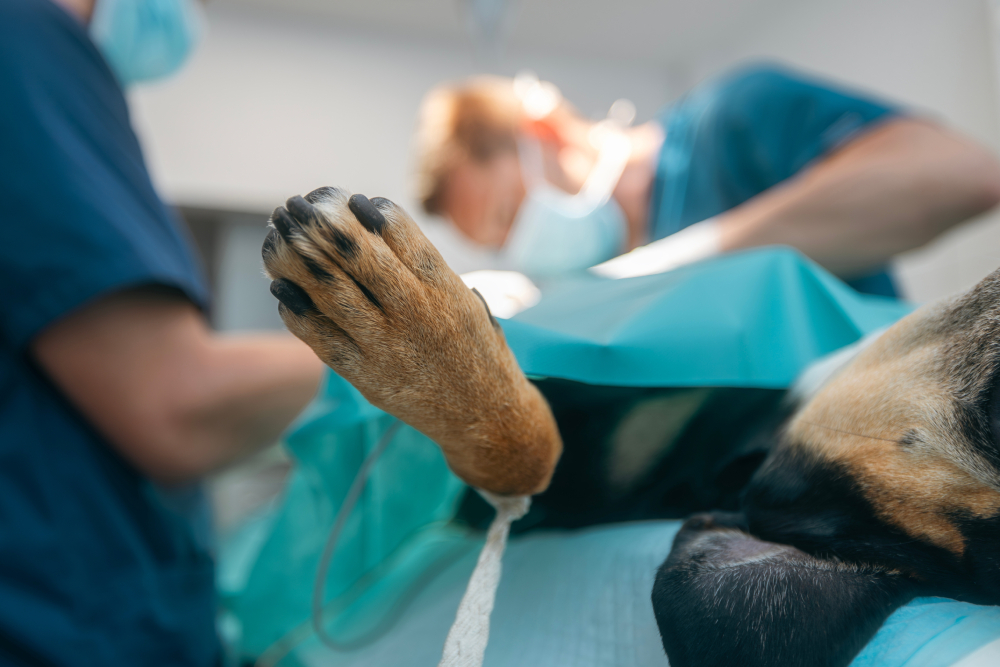
Pet Surgeries That Benefit Most from a Specialty Consult
When Does a Case Call for Specialist Input?
Not every surgery is straightforward. Some cases involve complex anatomy, high-risk anesthesia, unusual presentations, or conditions where the margin between a good outcome and a complication is narrow. These are the cases where a specialty consultation can change the trajectory of care, whether that means a board-certified surgeon guiding the surgical plan, a diplomate anesthesiologist managing a high-risk patient, or an oncologist helping determine whether surgery is the right first step.
For veterinarians, having access to that expertise without the delays and logistics of a traditional referral keeps cases moving and keeps clients confident. For pet owners, knowing your veterinarian is collaborating with specialists means your pet is getting the highest level of planning and oversight available.
VESPECON provides concierge-style specialty collaboration for practices across the US, connecting general practitioners with board-certified experts in surgery, anesthesia, oncology, ophthalmology, dentistry, and more. We work alongside your veterinary team through the entire case, from pre-surgical planning to post-operative follow-up. If your pet’s case would benefit from specialist input, ask your veterinarian about working with a VESPECON partner practice, or find more information about our network of hospitals here or contact us.
Why Anesthesia Consults Matter More Than Most People Realize
Anesthesia is often the part of surgery that owners worry about most, and for good reason. For high-risk patients, the anesthetic plan can be just as important as the surgery itself. Brachycephalic breeds with compromised airways, senior pets with cardiac or renal disease, pediatric patients, exotics, and animals with complex metabolic conditions all benefit from protocols designed by someone who manages these risks every day.
VESPECON’s board-certified veterinary anesthesiologists (DACVAA diplomates) provide pre-operative risk assessment and protocol design, real-time guidance during high-risk procedures, and pain management planning that accounts for the patient’s full clinical picture. For general practitioners, this means confidence in cases that would otherwise feel like a stretch. For pet owners, it means your pet’s anesthesia is being managed with the same level of expertise found in university teaching hospitals.
Whether the concern is a brachycephalic dog undergoing airway correction, a geriatric cat needing dental extractions, or an exotic species with limited anesthetic literature, a boarded anesthesiologist consult can make the difference between a routine recovery and a preventable complication. Contact us to connect with our anesthesia team.
Small Animal Surgery: The Cases That Benefit from Specialist Collaboration
General practice surgeons handle a tremendous range of procedures, but certain cases benefit from the planning, technique, and decision-making that board-certified small animal surgeons (DACVS-SA diplomates) bring to the table. These are the cases where surgical margins matter, where anatomy is tricky, or where the wrong approach can mean a second surgery.
Orthopedic Surgery
Cruciate ligament injuries are among the most common orthopedic problems in dogs, and surgical stabilization protects the knee from progressive cartilage damage and arthritis. Many dogs are candidates for TPLO surgery, but selecting the right technique depends on the patient’s size, conformation, and concurrent joint disease. A specialty consult ensures the approach is matched to the patient, not just the diagnosis.
Complex fractures involving joints, growth plates, or multiple fragments often require advanced fixation techniques that go beyond standard plating. Pre-operative planning with a surgeon who handles these cases regularly improves implant selection, reduces surgical time, and lowers the risk of complications. In cases where limb salvage isn’t feasible, amputation surgery may be the kindest path forward, and having a surgeon help frame that conversation with the family makes a difficult decision more manageable.
Hip dysplasia presents a range of surgical options depending on the patient’s age, severity, and goals. For some, a femoral head ostectomy provides reliable pain relief. For others, total hip replacement or juvenile interventions are more appropriate. A specialist consult helps match the surgery to the patient and sets realistic expectations for recovery and rehabilitation.
Emergency and Abdominal Surgery
Foreign body obstruction is one of the most time-sensitive surgical emergencies in small animal practice. When imaging reveals a linear foreign body, a compromised intestinal wall, or a patient that’s deteriorating quickly, having a surgeon available for real-time consultation on approach, resection decisions, and post-operative planning improves outcomes. Coordinated diagnostic imaging through our tele-radiology services can help clarify findings before the patient even reaches the surgical suite.
Brachycephalic airway surgery, bladder stone removal, splenic torsion, and other soft tissue procedures all benefit from specialist input when the case doesn’t fit the textbook. Our DACVS-SA diplomates collaborate actively through the entire case lifecycle, from imaging interpretation through recovery planning.
Oncology: When Surgery Is Part of a Bigger Plan
A lump is never just a lump until you know what it is. Early evaluation, accurate staging, and thoughtful surgical planning are what separate a curative outcome from one that requires additional intervention. Understanding the types of cancer in pets and how they behave helps veterinarians and pet owners make informed decisions about when to operate, how aggressively to pursue margins, and what follow-up care looks like.
VESPECON’s board-certified veterinary oncologists (DACVIM-Oncology diplomates) provide pre-surgical staging guidance to determine whether surgery alone is likely curative or whether chemotherapy or radiation should be part of the plan. They advise on surgical margins and approach so the first surgery gives the best chance of complete removal, and they help interpret pathology reports and design post-operative monitoring protocols.
For general practitioners, oncology collaboration means fewer cases that come back with dirty margins and fewer families blindsided by a diagnosis that could have been staged earlier. For pet owners, it means your pet’s treatment plan was built by a team that understands how the cancer is likely to behave, not just how to remove it. Our diagnostic imaging services, including tele-radiology, support staging and surgical planning from the start. Contact us to discuss a case.
Veterinary Dentistry: Beyond the Routine Cleaning
Dental disease is one of the most common conditions in dogs and cats, and while routine cleanings are well within general practice scope, certain oral cases benefit significantly from input by a board-certified veterinary dentist (DAVDC diplomate). These include fractured teeth with pulp exposure where root canal therapy may save the tooth, jaw fractures that require specialized fixation and careful alignment, oral masses that need oncologic staging and planned surgical margins, advanced periodontal disease with significant bone loss, and malocclusions or developmental abnormalities affecting function.
The difference between extracting a tooth and performing an endodontic procedure that preserves it can be significant for the patient, and knowing which cases are candidates for advanced treatment requires the kind of judgment that comes from specialty training. VESPECON’s dentistry advisors can review dental radiographs remotely, consult on treatment planning, and help determine whether a case should stay in-house or move to a specialty facility.
For pet owners, this means your pet’s dental pain gets addressed with the full range of options on the table, not just the ones available in every clinic. Contact us to connect with our dentistry team.
Ophthalmology: Protecting Vision When the Stakes Are High
Eye conditions can escalate quickly, and the difference between preserving vision and losing it often comes down to how fast the right treatment begins. Board-certified veterinary ophthalmologists (DACVO diplomates) bring the expertise to manage cases where general practice experience may not be enough.
Cases that benefit most from ophthalmology consultation include deep or complicated corneal ulcers that aren’t responding to standard therapy, glaucoma requiring pressure management or surgical intervention, lens luxation where timing determines whether the eye can be saved, eyelid masses or conformational defects that need precise surgical correction, and sudden vision loss where rapid diagnosis changes the treatment plan entirely.
VESPECON’s ophthalmology advisors can review images remotely, guide initial stabilization while a referral is arranged, and consult on whether a case needs immediate surgical intervention or can be managed medically. For practitioners in areas without a local ophthalmologist, this access can be the difference between saving an eye and losing it. Contact us to discuss an urgent or complex eye case.
Equine Surgery: Specialty Support for Large Animal Cases
Equine surgery carries unique challenges: large patient size, field conditions, owner economics, and athletic performance expectations all factor into decision-making. Whether it’s colic surgery, orthopedic repair, upper airway correction, or a complicated wound, having access to a board-certified large animal surgeon (DACVS-LA) or sports medicine specialist (DACVSMR) can shape the surgical approach, recovery plan, and long-term prognosis.
VESPECON’s equine surgical advisors support cases that involve colic evaluation where surgical vs. medical management is unclear, fracture assessment and fixation planning, upper respiratory surgery for performance-limiting conditions, wound management and reconstructive decisions in the field, and lameness workups where advanced imaging interpretation guides the next step.
For equine practitioners, specialty collaboration means access to surgical planning expertise without necessarily transporting the horse. Our tele-radiology and diagnostic imaging services support remote case review, and our equine advisors are available for real-time consultation during procedures. Contact us to coordinate equine case support.
How VESPECON Specialty Collaboration Works
The goal is simple: get specialist-level input into your case without the delays, logistics, and client frustration that traditional referrals can involve. Here’s how it works in practice.
- You identify a case that would benefit from specialist input. That might be a complex surgical plan, a high-risk anesthesia patient, an oncology case that needs staging guidance, or an eye that’s deteriorating fast.
- You reach out to VESPECON. Our dedicated liaison coordinates the right specialist for your case, whether that’s a surgeon, anesthesiologist, oncologist, ophthalmologist, dentist, or radiologist.
- Active collaboration through the case. This isn’t a one-and-done phone call. Our specialists stay involved through imaging review, surgical planning, intra-operative guidance when needed, and post-operative follow-up.
- Your client stays with you. The case stays in your practice (or moves to a VESPECON partner hospital when indicated), and the client sees a veterinary team that’s working together seamlessly.
Our network includes board-certified diplomates across surgery, anesthesia, internal medicine, oncology, ophthalmology, dentistry, neurology, dermatology, cardiology, radiology, and more. For practices that want to elevate their surgical capabilities without building a specialty department, VESPECON provides the expertise on demand.

Better Outcomes Start with Better Planning
The cases that benefit most from specialty consultation aren’t always the most dramatic. Sometimes it’s the cruciate repair where conformation makes standard technique risky. Sometimes it’s the dental case where a root canal could save a functional tooth. Sometimes it’s the senior dog whose bloodwork makes anesthesia a genuine concern. In every case, having a board-certified expert involved in the planning produces better outcomes, fewer complications, and more confident conversations with clients.
If you’re a veterinarian looking to elevate your surgical cases, or a pet owner who wants to know your pet’s care team includes the highest level of expertise available, we’re here to help. Contact us to discuss a case, explore our network of specialty hospitals, or learn how diagnostic imaging and tele-radiology can support faster, more confident decisions.



Leave A Comment