
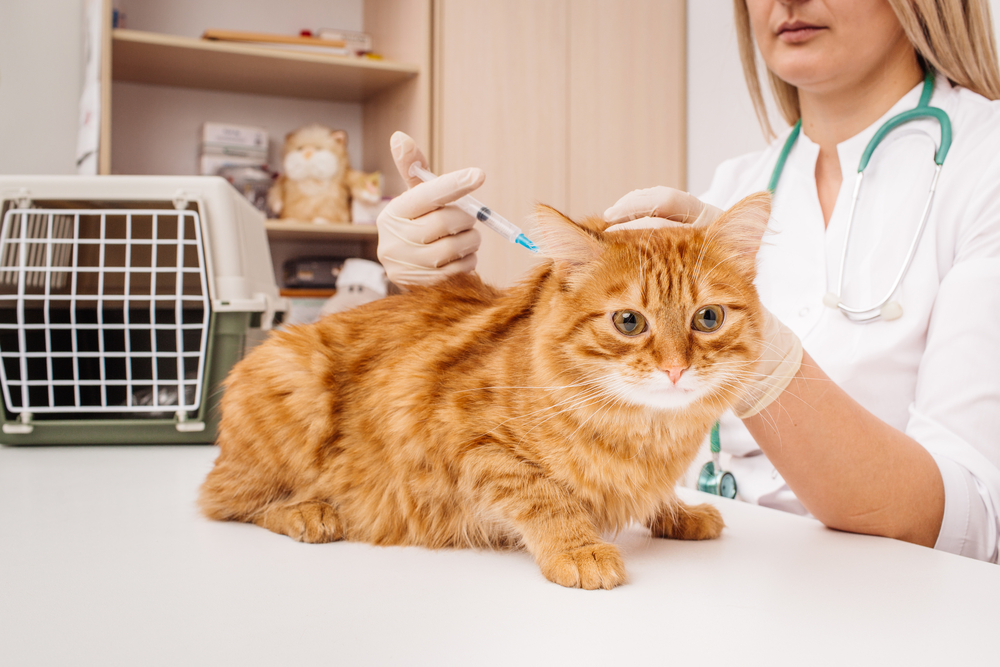
Safer anesthesia in a high-risk patient starts long before induction, with a workup and protocol built around that specific patient rather than a standard template. A brachycephalic, geriatric, cardiac, or renally compromised patient carries risk that is real but largely modifiable through prospective planning, drug selection matched to the underlying disease, and monitoring that anticipates trouble instead of reacting to it. Anesthetic mortality in veterinary medicine is measurable, and much of it traces back to gaps in preparation rather than the anesthetic itself. Bringing an anesthesia specialist into the plan early is one of the most reliable ways to close those gaps for the patients who least tolerate a surprise.
VESPECON connects your practice with board-certified anesthesia and analgesia specialists who help you build a plan for the patient in front of you, from pre-anesthetic risk assessment through monitoring and recovery. Our specialty consultations keep that collaboration going across the life of a case, so you have specialist input at the decision points that matter most for a fragile patient. Because we consult around the clock, you can get answers when a high-risk procedure cannot wait. If you are preparing to anesthetize a complicated patient, our team can weigh in before you finalize the protocol.
Four Things to Settle Before Induction
- Most anesthetic risk in high-risk patients lives in the modifiable half of the equation: preparation, protocol selection, monitoring intensity, and recovery management, not the fixed factors of breed, age, or disease.
- Published guidelines set the floor for monitoring and safety, and a compromised patient’s plan is expected to exceed that floor rather than simply meet it.
- Recovery is the highest-risk phase for many patient categories and the one most often left undersupported relative to induction and maintenance.
- Early specialist consultation, before the day of a scheduled procedure, produces meaningfully better outcomes than a same-day scramble to escalate.
How Much Anesthetic Risk Is Actually Measurable, and Where Does It Concentrate?
Anesthetic risk in veterinary patients is quantifiable, and it does not spread evenly across the caseload. The anesthetic risk and complications documented across companion-animal populations concentrate in the sick, the very young, and the very old. That concentration is the whole reason risk stratification works.
Structured scoring is how you see it coming. Prospective anesthetic mortality risk assessment using ASA status and equivalent scoring tools changes outcomes, because it forces the pre-anesthetic condition and procedure urgency to be weighed before the patient is ever induced. An ASA III renal patient going in for an urgent procedure is a fundamentally different plan than an ASA I dental, and naming that difference up front is what lets you adjust for it.
It helps to split risk into two buckets. One is inherent: species, breed, age, and concurrent disease, the factors you cannot change once the patient is in front of you. The other is modifiable: how well the patient was prepared, which protocol you chose, how closely you monitored, and how you managed recovery. The collaboration model is built almost entirely on that second bucket, because that is the half of the equation a good plan can actually move.
Which Guidelines Set the Floor for an Anesthesia Plan?
Current evidence-based guidelines are the foundation every anesthesia plan builds from. The AAHA anesthesia and monitoring guidelines for dogs and cats set the floor for patient assessment, protocol design, monitoring, staffing, and recovery, and for a compromised patient, that floor is a starting point the plan is expected to exceed.
That distinction matters. For a healthy young patient, meeting the guideline minimums is appropriate. For a patient with cardiac disease or marginal renal function, the same minimums are where you begin, not where you stop. The Dechra anesthesia app is a great resource, with protocols for 24 common canine procedures and 15 feline procedures, approved by the Association of Veterinary Anesthetists. The monitoring and safety requirements scale up with the patient, and recognizing when a case has crossed that line is a core clinical skill.
When a protocol review would add real value, specialist input on protocol design is available before you commit to a plan you are not fully comfortable with.
Why Is the Brachycephalic Patient So Consistently Difficult?
The brachycephalic patient is consistently difficult because the anatomy itself creates risk. Stenotic nares, an elongated soft palate, a hypoplastic trachea, and everted laryngeal saccules obstruct the upper airway, so anesthesia in brachycephalic patients carries risk in every phase, from induction through recovery.
The pre-anesthetic priorities are specific: grade the airway before scheduling any elective procedure so the plan reflects the actual anatomy, pre-oxygenate before induction to buy apneic reserve, and think about positioning through induction and maintenance.
The clinical decisions that move the needle are concrete: a modified induction that shortens the window between sedation and a secured airway, extubation timed to the patient’s own ability to protect the airway rather than the clock, and a low threshold for extended observation or overnight monitoring after any airway manipulation. Recovery is where airway edema is most likely to obstruct, precisely when monitoring is often relaxed, which is why that last one is where these cases are won or lost.
How Does Age Change the Anesthetic Plan at Both Ends of Life?
Age modifies anesthetic risk at both extremes, and it does so through organ reserve rather than the number itself. The anesthesia and age considerations that shape these cases come down to reserve, not a birthday: the changes of old age and the immaturity of early life both reshape the protocol without ruling anesthesia out.
In the geriatric patient, reduced hepatic and renal drug clearance prolongs and deepens drug effect, cardiac reserve is diminished, and thermoregulation is impaired. Organ reserve narrows the margin between adequate anesthetic depth and cardiovascular compromise, and subclinical or partially characterized concurrent disease often sits underneath, quietly raising baseline risk. This is where the “is my pet too old for anesthesia” conversation lives, and the honest framing is that age is not the disqualifier; the workup is what tells you whether this patient can be supported safely. An elective procedure warrants a more complete pre-anesthetic evaluation; an urgent one is a matter of doing what time allows.
The very young patient carries a different set of vulnerabilities: immature hepatic metabolism, a real tendency toward hypothermia, hypoglycemia risk during fasting, and a small blood volume that makes even moderate hemorrhage clinically significant. In both groups, age alone is not a contraindication. A comprehensive evaluation and an adjusted protocol are what make it safe.
How Do You Anesthetize a Sick Patient Who Cannot Be Optimized First?
When you cannot fully optimize a sick patient before a necessary procedure, the goal shifts from ideal preparation to the best that time allows. When it cannot wait, anesthetizing the critical care small animal patient still starts with volume correction, electrolyte normalization, and targeting the single most destabilizing abnormality first.
Correcting hypokalemia or hyperkalemia before induction, in particular, is often the difference between a stable anesthetic and an arrhythmic one. Protocol design carries much of the safety. Anesthesia in sick patients leans on multimodal approaches that lower the dose of any single agent, titration to effect rather than to body weight, and perfusion pressure held as the primary goal when cardiovascular reserve is marginal. Total intravenous anesthesia earns its place where the cardiovascular effects of volatile agents are unwelcome.
Monitoring is where real-time decisions get made. Continuous blood pressure measurement, capnography for ventilatory management, and temperature monitoring are the minimums here, not the extras. When the patient’s response deviates from the plan, that data is what tells you to change course. For a cardiac or thoracic case, remote interpretation of a cardiac or radiographic study can sharpen the pre-anesthetic picture before you induce.
What Makes the Patient With Multiple Diseases the Hardest Case?
The patient with multiple diseases is the hardest case because several interacting conditions stack up at once, and a choice that helps one problem quietly worsens another. Anesthesia in patients with comorbidities is the everyday high-risk case, not one dramatic disease.
Think of the geriatric dog with cardiac disease and renal insufficiency, or the patient on chronic NSAIDs for osteoarthritis with an incidentally found hepatic mass. The protocol conflicts stack up: agents that support one organ system stress another, monitoring parameters point in different directions and require judgment to reconcile, and recovery gets more complicated when several systems are involved at once.
| Comorbidity pattern | Central anesthetic tension |
| Cardiac disease plus renal insufficiency | Perfusion support versus volume load on a compromised heart |
| Hyperthyroidism plus hypertension | Managing catecholamine sensitivity and blood pressure swings |
| Chronic NSAIDs plus hepatic disease | Analgesia needs versus altered drug metabolism |
Sometimes the right first move is stabilizing one condition before touching the presenting problem, and communicating why that sequencing serves the patient is part of the plan.
Why Does the Neurologic Patient Need a Different Anesthetic Approach?
The neurologic patient needs a different approach because the anesthetic plan directly shapes the neurologic outcome. In anesthesia in patients with neurologic disease, drug choice, the relationship between hypercapnia and intracranial pressure, and blood pressure targets all shape the result, so specialist input on the protocol is the standard of care for intracranial cases.
For suspected or confirmed intracranial disease, the priorities are clear. Choose drugs and techniques that avoid raising intracranial pressure. Manage ventilation deliberately, because hypercapnia drives intracranial hypertension. Hold blood pressure targets that preserve cerebral perfusion without worsening edema. And plan a recovery for a patient who may not protect the airway normally.
The spinal cord patient needs its own attention. Positioning through induction and maintenance protects a compromised or at-risk cord, analgesia has to account for regions where sensation may be abnormal or absent, and post-procedure monitoring during recovery is where subtle deterioration first shows. Neurologic diagnosis and anesthetic planning are interdependent, and getting eyes on the imaging matters. Our team provides timely imaging study interpretation of CT and radiographic studies to inform the plan before a neurologic patient goes under.
How Do You Recognize and Respond to Anesthetic Complications?
Even a well-built plan in a well-managed patient can develop complications, and the outcome turns on how fast you catch them and how systematically you work them. Well-planned anesthetics still produce anesthesia-related complications, with hypotension, hypoventilation, and hypothermia at the top of the intraoperative list.
The complications that matter most intraoperatively are predictable, which is exactly why they are catchable:
- Hypotension: the most common intraoperative problem, worked in tiers from anesthetic depth adjustment and IV fluid support up to vasoactive drugs when fluids alone are not enough.
- Hypoventilation and hypercapnia: recognized on capnography and clinical signs, prompting a decision between manual and mechanical ventilation.
- Hypothermia: caught with continuous temperature monitoring and countered with active warming, since it slows drug metabolism and drags out recovery.
- Hypoglycemia: a real threat in pediatric, small, and septic patients, where blood glucose belongs on the monitoring list.
Working an anesthetic that is going wrong is a discipline of its own: a calm, systematic troubleshoot under pressure, and the judgment to abort a procedure when that is what serves the patient. Managing small animal anesthetic complications well is less about heroics and more about early recognition and an ordered response.
Why Is Recovery the Phase That Deserves the Most Attention?
Recovery deserves the most attention because it is the highest-risk phase of anesthesia for many patients and routinely the most undersupported. The anesthetic recovery complications that appear after the procedure are often watched with periodic checks instead of the continuous observation they need through extubation.
Adequate recovery monitoring in a high-risk patient means attention to temperature, respiratory pattern, pulse quality, and level of consciousness through extubation and beyond. The specific risks track the patient. The brachycephalic patient can obstruct the moment the endotracheal tube comes out, as airway edema re-emerges without the tube holding things open. The geriatric or neurologic patient struggles with thermoregulation and delayed consciousness. And pain is itself a recovery complication; inadequate analgesia often masquerades as an apparent anesthetic problem, with agitation and instability that resolve once the pain is actually addressed.
Safe recovery depends on staffing and equipment that make continuous observation achievable, plus a willingness to extend observation for any patient who has not genuinely met discharge criteria on a standard timeline. The clock is a poor substitute for the patient’s actual status.
When Should You Consult, and When Should You Refer?
The collaboration model is the clinical standard for high-risk anesthesia, and it is a spectrum rather than a choice between managing a case alone and handing it off entirely. It runs from pre-anesthetic protocol consultation, through specialist co-management on the day, to structured communication after the procedure. Most cases live somewhere in the middle.
The practical decision points sort out reasonably well:
| Level of support | Fits patients like |
| Consultation without full referral | A protocol review, pre-anesthetic optimization guidance, or remote monitoring support for a manageable high-risk case |
| Referral for the procedure itself | Intracranial disease, severe cardiorespiratory compromise, or pediatric cases with complex comorbidities |
| Co-management on the day | A high-risk case you can run in-house with a specialist actively involved at the decision points |
Preparing the specialist well makes the collaboration work: send the clinical history, current medications, existing diagnostics, and the specific anesthetic concerns that prompted the outreach. A pre-anesthetic protocol consultation scheduled ahead of the procedure consistently produces better outcomes than a same-day escalation.

Frequently Asked Questions About High-Risk Anesthesia in Veterinary Practice
Common questions about high-risk anesthesia center on whether a patient is truly too risky to anesthetize, how early to involve a specialist, and what to bring to a consultation. The short answers below cover each in turn, drawing on the risk-stratification and planning principles this article lays out.
Is any patient truly too high-risk to anesthetize?
Rarely in absolute terms. Most patients labeled “too risky” are patients whose risk has not yet been stratified, optimized, or matched to an appropriate protocol and monitoring plan. The real question is usually whether the procedure is necessary enough to justify the risk that remains after preparation, and whether the setting has the monitoring and support the patient needs. For genuinely fragile patients, that is often a conversation worth having with a specialist before deciding.
How early should I involve an anesthesia specialist?
As early as you can, ideally before the day of a scheduled procedure. Early consultation gives time for pre-anesthetic optimization, considered protocol design, and any additional diagnostics that would change the plan. Same-day escalation still helps, but it forecloses options that a few days of lead time would have kept open. For urgent cases that cannot wait, around-the-clock consultation means you can still get specialist input in real time.
What information should I have ready for a consultation?
Have the clinical history, a current medication list, and any existing diagnostics on hand, including bloodwork, imaging, and cardiac studies. Be specific about the anesthetic concern that prompted the consultation, whether that is a cardiac murmur, a compromised airway, or unstable electrolytes. The more precisely the concern is framed, the more targeted the protocol guidance can be, and the less time gets spent reconstructing the picture.
Better Outcomes Start With an Earlier Conversation
Anesthetic risk is real and measurable, and it is substantially modifiable through systematic pre-anesthetic evaluation, a protocol matched to the individual patient, monitoring that anticipates trouble, real attention to recovery, and specialist input at the right moments. The fragile patients are precisely the ones where that planning pays off most.
We are here as a partner in that process, for pre-procedure consultation, protocol design, co-management on the day, and a debrief when a complex case deserves one. If you have a complicated patient coming up, start a case conversation before the day it is scheduled, so we can build the plan together while there is still time to shape it.



Leave A Comment