

Persistent gastrointestinal signs are among the most frequently encountered presentations in small animal general practice and among the most likely to become diagnostic dead ends when managed empirically without a structured workup. A dog with recurring soft stools and occasional vomiting may cycle through metronidazole and bland diet protocols for months before anyone asks why the inflammation keeps returning. A cat losing weight and vomiting several mornings a week may be treated symptomatically for years before an underlying systemic condition is identified.
The clinical cost of delayed diagnosis in chronic GI cases is real: progressive mucosal damage, compounding secondary infections, accelerating weight loss, and client attrition from a case that seems to defy resolution. Diarrhea and chronic vomiting are symptoms of an underlying process, not diagnoses in themselves, and distinguishing between the diagnostic categories that drive them requires a stepwise approach informed by specialist-level input at key decision points.
VESPECON’s clinical advisory services connect general practitioners with board-certified internal medicine, clinical pathology, and nutrition specialists who support case management from the diagnostic workup through treatment monitoring. If your practice is managing recurring GI cases without the specialist input to move the diagnostic needle, contact VESPECON to discuss partnership options.
What Does Persistent GI Disease Actually Signal?
Acute Versus Chronic: The Distinction That Determines the Workup
The differential for gastrointestinal signs in dogs and cats is broad, and the single most useful initial distinction is temporal. Acute diarrhea and vomiting (those lasting less than five to seven days without systemic signs) are appropriately managed conservatively in most cases. Persistent GI signs, meaning those lasting beyond two weeks, recurring at a consistent frequency, or accompanied by weight loss, appetite changes, or laboratory abnormalities, warrant investigation rather than repeated empiric treatment.
The distinction matters because the conditions driving chronic GI disease are categorically different from those causing acute distress. Inflammatory bowel disease, protein-losing enteropathy, neoplasia, and systemic organ dysfunction do not respond reliably to antimicrobials and dietary modification. Continuing to treat these patients with empiric therapy delays the workup, accumulates unnecessary treatment costs, and allows underlying pathology to progress.
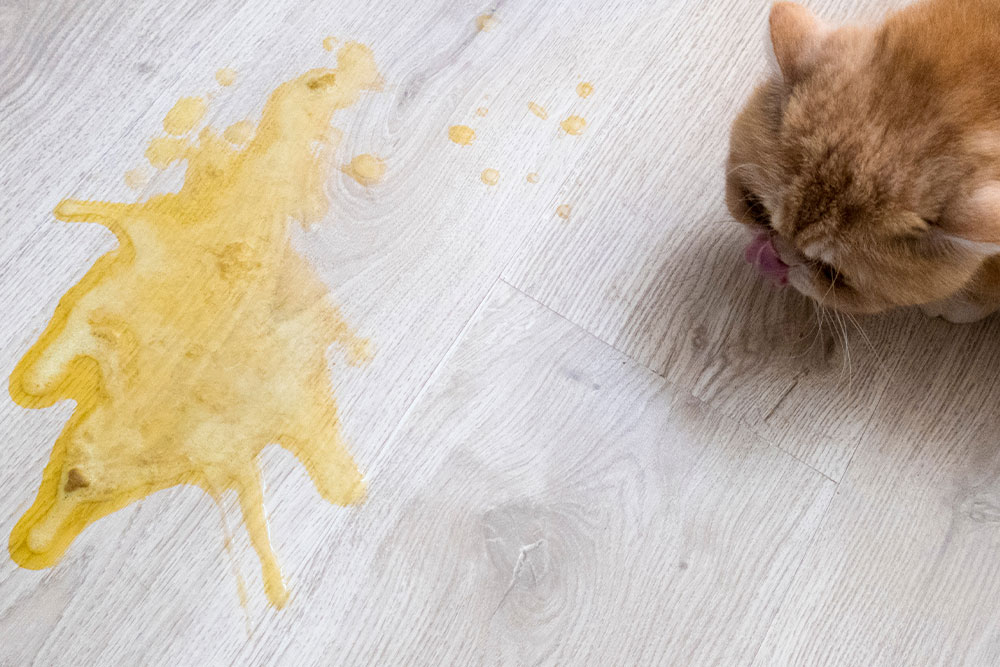
For vomiting specifically, the character and timing of what comes up carries diagnostic information before testing begins. Bilious yellow vomit occurring first thing in the morning on an empty stomach suggests bilious vomiting syndrome or bile reflux gastritis rather than primary small intestinal disease. Dark or coffee-ground material suggests digested blood from upper GI ulceration and warrants same-day evaluation. The appearance of vomit is a clinical data point worth client-side documentation. Passive regurgitation points toward esophageal disease rather than true vomiting, and conditions like megaesophagus direct the workup in an entirely different direction.
Building the Differential: The Most Common Drivers of Chronic GI Signs
Dietary and Food-Related Causes
Food is implicated in a larger percentage of chronic GI cases than the initial presentation suggests, and it is frequently the last variable examined. Food allergies represent an immune-mediated hypersensitivity to one or more dietary proteins (most commonly chicken, beef, dairy, and wheat) and can develop at any point in the patient’s life, including after years on a stable diet without apparent problems. Food intolerances produce GI signs through non-immunologic mechanisms without the cutaneous or systemic involvement that characterizes true food allergy.
Clinically, the distinction between food-responsive GI disease and other forms of chronic enteropathy may not be apparent without a properly conducted elimination diet trial. The critical word is properly: over-the-counter limited ingredient diets fail as diagnostic tools due to manufacturing cross-contamination and inconsistent labeling. A structured eight to twelve week hydrolyzed or novel protein elimination trial, using an ingredient the patient has genuinely never encountered, is required for valid results. Complete compliance is non-negotiable: no treats, no flavored medications, no food sharing with other household pets.
Pet food selection matters both diagnostically and therapeutically, and for practices without access to a nutritionist, VESPECON’s nutrition advisory consultations provide guidance on diet trial design, therapeutic diet selection, and long-term dietary management for food-responsive GI disease.
Changing food abruptly, rotating protein sources without a transition protocol, and dietary inconsistency from multiple food sources or table scraps all disrupt the intestinal microbiome and can perpetuate symptoms in sensitive patients. Gradual transitions and dietary consistency are both therapeutic recommendations and diagnostic prerequisites. Pet food safety, including avoiding contaminated commercial products and managing garbage or outdoor scavenging access, is a frequently overlooked contributor to episodic acute-on-chronic presentations.
Swallowed foreign material is worth keeping on the differential for chronic or intermittent vomiting that has not responded to dietary and medical management. GI obstructions do not always present acutely; partial obstructions from fabric, bones, or accumulated hair can cause weeks or months of waxing-and-waning symptoms that mimic IBD or motility disorders.
Infectious and Parasitic Causes
Intestinal parasites remain underdiagnosed in practices without a strong fecal testing protocol. Giardia, coccidia, roundworms, hookworms, and whipworms cause varying combinations of soft stool, diarrhea, weight loss, and vomiting, and routine fecal flotation may miss Giardia without a specific antigen assay. Annual fecal testing as a standard wellness component catches chronic infections in patients who appear clinically stable. Practices that integrate routine parasite screening into wellness protocols consistently identify a higher percentage of subclinical infections.
Beyond parasites, the bacterial GI microbiome plays a significant role in chronic GI disease. Antibiotic-responsive diarrhea, dysbiosis, and small intestinal bacterial overgrowth are increasingly recognized as contributors to chronic GI signs, and the tendency to treat these with repeated antibiotic courses rather than addressing the underlying cause perpetuates the cycle.
Systemic and Organ Disease
A substantial percentage of chronic vomiting cases, particularly in cats, are not primarily GI problems at all. When the upper GI tract is the symptom generator but another organ system is the driver, treating the stomach produces temporary improvement at best.
The major systemic contributors to chronic vomiting include:
- Chronic kidney disease: one of the most common causes of near-daily vomiting in older cats; uremic nausea responds poorly to antiemetic therapy alone without addressing the underlying renal disease
- Feline hyperthyroidism: frequently presents with vomiting alongside weight loss and increased appetite in cats over eight; TT4 should be part of the geriatric feline baseline panel
- Pancreatitis: causes significant nausea in both species, often with subtle or misleading clinical signs in cats; lipase and PLI assays are more sensitive than amylase for pancreatic inflammation
- Gall bladder disease and liver disease: both produce chronic nausea, and post-bile acid stimulation testing adds diagnostic value when hepatic involvement is suspected
The overlap between these conditions is exactly where VESPECON’s internal medicine advisors add the most value. When the clinical picture suggests multiple concurrent contributors, structured specialist input reduces the diagnostic workload and prevents the trap of treating each abnormality in isolation.
Primary GI Tract Disorders
When systemic causes have been ruled out or adequately managed and chronic GI signs persist, the differential narrows to conditions originating within the intestinal tract itself. The most clinically significant are:
- Inflammatory bowel disease: chronic immune-mediated mucosal inflammation; the most common cause of long-term vomiting and diarrhea in both dogs and cats; subtypes carry different prognostic implications
- Lymphoma: in older cats especially, intestinal lymphoma can be indistinguishable from IBD without histopathology; empiric steroid trials that improve IBD may produce transient improvement in lymphoma as well, which is why they do not constitute a diagnostic test
- Gastric ulcers: secondary to NSAID use, hypoadrenocorticism, mast cell disease, or GI neoplasia; may present with hematemesis or as persistent nausea without visible blood
- Pyloric stenosis: most commonly seen in brachycephalic breeds and older dogs; delayed gastric emptying produces characteristic post-prandial vomiting of undigested food
- Gastric cancer: blood-tinged vomit and progressive anorexia in older large-breed dogs, particularly German Shepherds, warrants imaging and endoscopic assessment
The critical diagnostic challenge is that IBD and intestinal lymphoma, both common and clinically similar, require histopathologic differentiation. Cytology alone is not sufficient. Treatment for each condition differs significantly, and empiric steroid therapy without a tissue diagnosis introduces risk in the lymphoma patient.
The Stress and Behavioral Dimension
Chronic stress and anxiety are underappreciated contributors to GI signs in general practice, particularly in cats. Feline stress from routine disruption, multi-cat household conflict, new pets, or construction noise triggers neuroenteric dysregulation that produces vomiting and diarrhea identical in appearance to medically caused symptoms. Stress-related GI disease is a diagnosis by exclusion, and ruling out medical causes first is essential. For confirmed behavioral contributors, VESPECON’s behavior advisory service supports management strategies beyond what most general practices have the capacity to provide in-house.
Fast eating in dogs and cats (the classic “scarf and barf” pattern) warrants specific mention because it is mechanical rather than systemic. Interactive feeders that extend mealtime, meal separation in multi-pet households, and smaller and more frequent feeding address the root cause without medication.
The Stepwise Diagnostic Workup
Baseline Diagnostics
The workup for chronic GI signs begins with a thorough history and physical examination, followed by baseline diagnostics that should be considered standard rather than optional in any patient with signs lasting more than two weeks:
- Bloodwork: CBC, chemistry panel, and total T4 in cats over seven; identifies systemic drivers and establishes baseline organ function for treatment monitoring
- Urinalysis: evaluates renal concentrating ability, protein loss, and urinary tract infection
- Fecal testing: flotation plus Giardia antigen assay; consider enteric PCR panels in complex or refractory cases
- X-ray, with or without barium: useful for finding GI blockages, evaluating transmit time, finding strictures, and general abdominal evaluation as a first-pass
- Ultrasound: evaluates intestinal wall layering and thickness, lymph node enlargement, hepatic and pancreatic architecture, and identifies masses or free fluid
Practices with in-house tele-radiology access through VESPECON can submit abdominal ultrasound studies for same-day interpretation when the imaging findings require specialist-level assessment. STAT interpretation options are available for urgent cases, which is particularly relevant when a mass lesion or significant lymphadenopathy is identified and the clinical picture needs rapid clarification.
Diet Trials
When baseline diagnostics identify no systemic cause, a structured diet trial is the next step before advancing to endoscopic evaluation. Three to four weeks of strict compliance on a hydrolyzed or novel protein prescription diet is sufficient to assess GI response. Response to diet alone, with subsequent relapse on diet challenge, confirms food-responsive disease and avoids the need for anesthesia and biopsy.
Endoscopy and Biopsy
When baseline diagnostics and diet trials have not identified the cause, or when imaging suggests mucosal abnormalities, endoscopy provides direct visualization of the upper and lower GI mucosa and allows collection of multiple biopsy samples under anesthesia. Recovery is typically rapid. Endoscopic biopsies provide mucosal surface samples, which is adequate for diagnosing most forms of IBD and identifying lymphoma in many cases.
When full-thickness tissue is required for accurate diagnosis, or when imaging identifies a mass or structural abnormality requiring hands-on evaluation, exploratory surgery allows comprehensive abdominal assessment and GI biopsy from multiple sites. Full-thickness samples are more sensitive for distinguishing between IBD subtypes and intestinal lymphoma, and surgery is indicated when endoscopic access to the affected segment is limited or when the clinical picture suggests a condition requiring surgical intervention.
Histopathologic differentiation between IBD, low-grade lymphoma, and other infiltrative conditions guides the treatment decision in a way that no other diagnostic modality can. This is a decision point at which VESPECON’s clinical pathology advisors provide meaningful input on biopsy submission, slide interpretation, and treatment planning.
Treatment Approaches Based on Diagnosis
Food-responsive disease: management centers on maintaining the dietary control that resolved symptoms during the trial. Establishing household protocols around treats, flavored supplements, and food sharing prevents inadvertent re-exposure. Ingredient consistency matters: recipe changes in commercial diets can reintroduce offending proteins without obvious labeling changes.
IBD management: standard protocol combines anti-inflammatory or immunosuppressive medications, most commonly prednisolone with or without chlorambucil in cats, with dietary adjustments to reduce antigenic load and support intestinal barrier function. Cobalamin supplementation is frequently indicated in cats with chronic small intestinal disease. Individual responses vary considerably, and dose titration based on clinical response and monitoring bloodwork is standard.
Systemic disease management: when an organ condition drives the GI signs, therapeutic focus shifts accordingly. Chronic kidney disease management combines hydration support, phosphorus restriction, and medications addressing secondary complications including uremic nausea. Pancreatitis management addresses nausea, pain, and nutritional support while the pancreas recovers. Hyperthyroidism is treated medically, with radioiodine, or surgically depending on patient profile and client factors. GI signs typically improve significantly as the primary condition is controlled.
Lymphoma and GI neoplasia: treatment selection depends on histologic classification, grade, and staging. VESPECON’s oncology advisors support treatment planning for practices managing GI lymphoma or neoplasia cases in-house, or the concierge referral service coordinates specialist appointments when oncology referral is the appropriate next step.
Supporting Clients Through a Complex GI Workup
Clients managing a pet with chronic GI signs carry a significant daily burden. The combination of mess, worry, and uncertainty about whether the current approach is working erodes confidence and compliance. Structured communication about the workup stages, expected timelines, and what each diagnostic result means for the next step keeps clients engaged and reduces the dropout that occurs when cases feel indefinitely unresolved.
Practical guidance to provide clients during the diagnostic period includes maintaining a consistent symptom log noting frequency, character, and timing of GI signs; adhering strictly to dietary protocols; avoiding informal trials with commercial limited-ingredient diets; and reporting any changes between appointments. Senior pet health monitoring through regular wellness exams with established baseline labs makes year-to-year changes in organ function more meaningful and catches progression earlier. Chronic GI signs in older pets warrant evaluation with a lower threshold for bloodwork and imaging than in younger adults.
Hairballs deserve brief clinical mention in the feline chronic vomiting workup: more than one true hairball per month, or cylindrical hair casts that are passed with significant effort, suggests a GI motility component that warrants investigation rather than simply increasing laxative use.
Frequently Asked Questions About Chronic GI Cases
Can food allergies develop in a patient on a long-term stable diet?
Yes. Food allergies develop through cumulative sensitization to a dietary protein and can emerge at any age, including in middle-aged or geriatric patients with no prior dietary problems. A change in symptoms in a patient on a long-standing stable diet should raise food allergy as a differential, not lower it.
Why does empiric treatment produce repeated transient improvement without resolution?
Metronidazole, bland diets, and short corticosteroid courses reduce GI inflammation broadly, which is why they produce clinical improvement regardless of the underlying cause. They do not address the driver of that inflammation. A patient with low-grade intestinal lymphoma and a patient with food-responsive IBD may both improve on metronidazole and relapse at the same rate. Distinguishing between them requires diagnostics, not additional treatment cycles.
When is referral to a specialist the right call?
Cases involving persistent weight loss without a diagnosis, suspected intestinal lymphoma or GI neoplasia, protein-losing enteropathy, refractory IBD, or any presentation where the diagnostic workup has not identified a treatable cause after appropriate baseline testing and a properly conducted diet trial are reasonable referral candidates. VESPECON’s concierge referral service manages the coordination process and maintains continuity with the referring practice through the case lifecycle.
Moving Chronic GI Cases From Management to Resolution
The clinical path through chronic GI disease in dogs and cats is methodical when it is approached as such. The baseline diagnostic workup eliminates systemic drivers. A properly conducted diet trial addresses food-responsive disease efficiently. Endoscopy and biopsy provide tissue-level information when needed. And accurate histopathologic diagnosis enables targeted therapy rather than perpetual empiric management.
For general practitioners managing complex GI cases, access to specialist-level input at the right decision points is the variable that shortens the diagnostic timeline, improves outcomes, and preserves the client relationship through a case that might otherwise feel unresolvable. VESPECON’s specialty consultations, tele-radiology interpretation, nutrition advisory, and continuing education resources are all available through a single partnership framework built around how general practice actually works.
If your practice is ready to move chronic GI cases from management to resolution, contact VESPECON to discuss partnership options.



Leave A Comment