
From Cracked Teeth to Severe Disease: When Dental Surgery Becomes Necessary
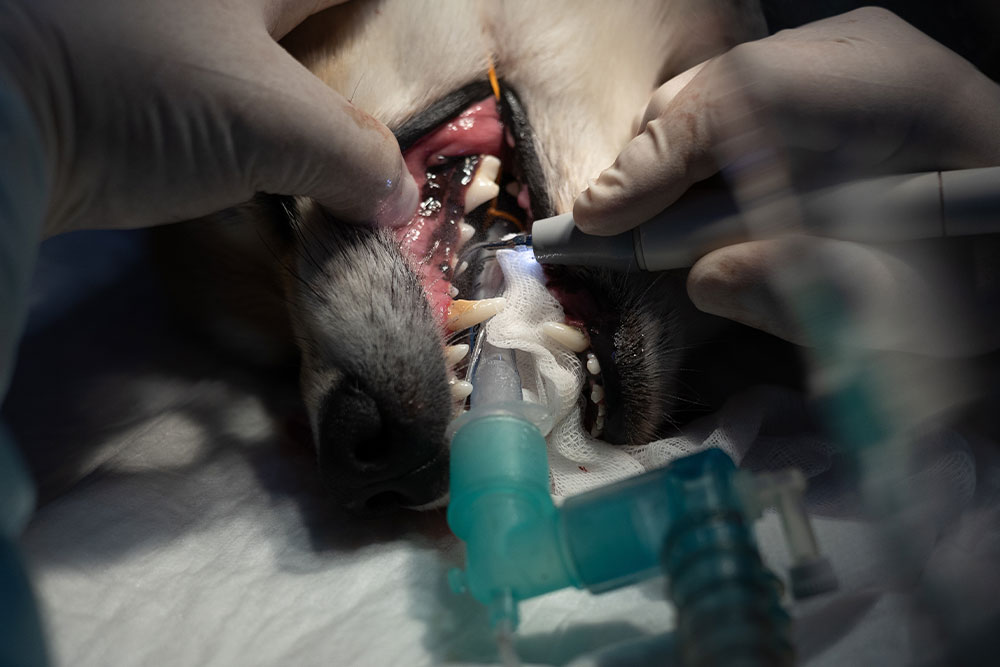
Not every dental problem resolves with cleaning and polishing. Fractured teeth with exposed pulp, resorptive lesions eroding enamel, severe periodontal disease destroying bone support, and oral tumors requiring margin removal all demand surgical intervention beyond routine prophylaxis. The decision about when to extract versus when to pursue advanced procedures like root canals or crown placement depends on tooth location, damage severity, patient cooperation for aftercare, and whether saving the tooth provides meaningful benefit.
VESPECON supports veterinary practices nationwide in managing complex dental surgery decisions through our specialty consultation network. Our specialists help primary veterinarians determine when extractions are necessary versus when procedures like endodontic therapy offer viable alternatives for salvaging important teeth. Through diagnostic imaging services, we provide expert interpretation of dental radiographs that reveal the full extent of disease below the gumline, with follow-up radiographs available within 24 hours and STAT interpretation options when time is critical. Our goal is empowering veterinary teams with timely, trustworthy guidance so they can make informed surgical recommendations through our partnership approach with practices across the country.
Why Dental Surgery Sometimes Becomes the Only Path Forward
Your pet’s behavior often speaks for their mouth. Dropping food, avoiding crunchy treats, drooling, pawing at the face, or a foul, rotten smell can signal deeper problems. These signs point to pain or infection that a simple cleaning cannot fix.
Surgery becomes necessary when disease or trauma threatens comfortable eating, when infection could spread through the bloodstream, or when pain relief alone is not enough. Extractions remove the source of pain. Advanced procedures like root canals or crowns may save function if the tooth is worth keeping and recovery care is realistic.
VESPECON’s board-certified specialists help veterinarians weigh options through virtual consultations. We consider which teeth matter most for chewing, radiograph findings, overall health, and what home care is feasible. Our network provides diagnostic imaging interpretation that guides decisions balancing medical need with quality of life.
How Dental Disease Progresses Beyond the Surface
Plaque forms daily and can harden into tartar within 1 to 2 days. Tartar roughens tooth surfaces, making it easier for bacteria to stick and push gums away from teeth.
This leads to gingivitis (red, swollen, bleeding gums), which is reversible. Without treatment, it advances to periodontal disease, where the tissues and bone holding teeth in place break down. Deep pockets form, teeth loosen, and abscesses can develop, causing significant pain and even facial swelling.
Dental care matters because exams catch disease early, and professional cleaning under anesthesia can remove tartar above and below the gumline. Polishing helps slow plaque from returning. VESPECON supports practices with staging guidance, extraction criteria, and monitoring plans for pets prone to dental disease.
When Does Your Pet Need Tooth Extraction or Oral Surgery?
Some conditions leave no good alternative to extraction. Advanced periodontal disease with major bone loss means the tooth can’t function and will keep infection alive. Root abscesses are painful and can spread. Keeping those teeth often prolongs suffering.
Fractured teeth need careful decisions. Small chips may just be smoothed and monitored. Breaks exposing the pulp (the nerve and blood supply) invite infection, and treating fractured teeth usually means a root canal to clean and seal the tooth or extraction to remove the pain source.
Retained baby teeth cause crowding, trap food, and speed up gum disease. Early deciduous tooth removal prevents damage to adult teeth.
Trauma and severe bite misalignment can injure soft tissues, wear down teeth, or prevent normal chewing. VESPECON helps veterinarians weigh extraction versus repair and present clear choices to pet owners.
Birth Defects and Growth Problems That Affect Oral Health
Some pets are born with extra teeth, missing teeth, or teeth in the wrong position. These can crowd the mouth, trap plaque, and cause mouth injuries. Developmental dental abnormalities may be mild or require treatment.
Persistent baby teeth can block adult teeth and usually need extraction. Enamel defects weaken teeth and raise fracture risk. Malocclusion is when the upper and lower jaws don’t meet correctly; in severe cases, teeth can poke the palate or gums and create ulcers.
Early checks matter. Monitoring lets veterinarians time interventions while bones are still growing and before secondary problems develop. VESPECON’s consultants help determine when observation, small reshaping, or surgery will give the best long-term comfort.
What Dental X-Rays Reveal That Surface Exams Cannot
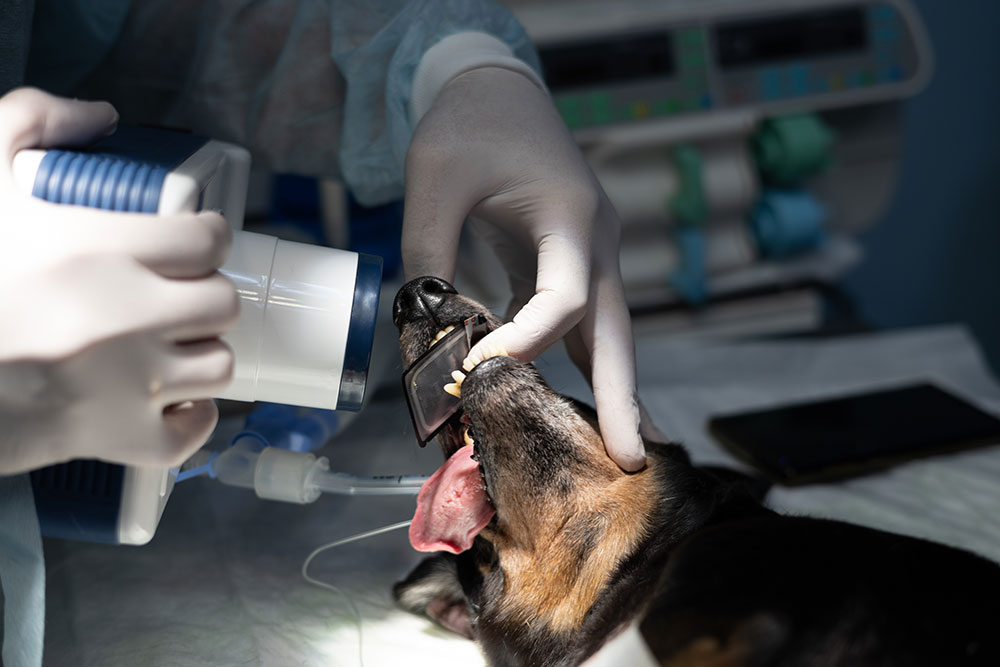
You can only see the crowns of teeth during an oral exam. Roots make up most of the tooth and hide under the gums. Disease often starts and spreads there. Intraoral dental radiography for pets reveals issues like root resorption (the body dissolving tooth structure), retained roots from past extractions, dead pulp in canals, and hidden bone loss.
Dental X-rays turn guesswork into a clear plan, showing if a tooth can be saved or should be removed, explaining swelling or pain, and identifying fractures that change treatment. The importance of dental X-rays becomes clear when even normal-looking teeth hide disease.
In complex cases involving tumors or major trauma, CT scans for dental evaluation can map the mouth and jaw in 3D for precise planning.
VESPECON’s radiograph interpretation services provide expert reading of dental X-rays and CT scans, with standard interpretation available within 24 hours and STAT options for urgent cases. This helps teams decide between extraction, root canal, or monitoring based on the full picture.
Complex Oral Surgery Beyond Simple Tooth Removal
Some problems require advanced surgery. Jaw fractures often need stabilization so bones heal in alignment. Infections complicate healing, so timing and planning matter.
Oronasal fistulas are openings between the mouth and nose that can follow severe gum disease or certain extractions. Pets with these often sneeze, have nasal discharge, or get repeated infections. Repair involves closing the opening with healthy tissue.
Deep infections can cause retrobulbar abscesses behind the eye, leading to eye bulging and severe pain. Treatment may include extracting an infected tooth, draining the area, and antibiotics. Oral tumors usually require wide margins, sometimes including bone, with reconstruction focused on comfort and function.
VESPECON helps practices decide what to manage in-house and when to refer to a specialty hospital within our network. We advise on planning, technique options, and post-op monitoring at a high level.
Managing Pain and Anesthesia, Simply Explained
Safe anesthesia starts with a pre-op exam and basic lab work to tailor medications. During procedures, teams monitor vitals like heart rate, blood pressure, and oxygen to keep pets safe.
Pain control works best in layers. Local nerve blocks numb specific areas, anti-inflammatories reduce swelling, and other medications target different types of pain. Common drugs used to relieve pain and multimodal analgesia for dental pain help pets wake up comfortable and stay that way at home.
Most pets are back to themselves within a few days. Call your vet if you see heavy bleeding, refusal to drink for 12 hours, worsening swelling, or signs of uncontrolled pain. VESPECON’s anesthesia specialists also advise on higher-risk pets to keep care safe and comfortable.
Protecting Teeth From Preventable Injuries
Many fractures come from chewing items harder than teeth. Bones, antlers, hard nylon, and ice can crack enamel and require extractions or expensive repairs. The dangers of popular dog chews also include blockages and tooth wear. Toy breeds need extra dental care. Their small jaws and crowded teeth increase fracture and gum disease risk.
Safer choices include flexible rubber toys, VOHC-accepted dental chews, and soft toys with supervision. Rotate toys to keep pets engaged and reduce risky chewing. Professional cleanings plus home care like brushing, wipes, or water additives help prevent problems between visits.
VESPECON helps practices build practical preventive plans tailored to each pet’s risks and routines.
Choosing Products That Actually Work
Not all dental products live up to their claims. The Veterinary Oral Health Council tests products and awards a seal to those that truly reduce plaque or tartar. VOHC-approved dental products include diets, treats, chews, water additives, and rinses that meet these standards.
A strong home routine includes:
- Daily brushing with pet-safe toothpaste (enzymes help break down plaque)
- Dental diets or treats that scrub as pets chew
- Water additives and rinses as helpful add-ons, not replacements
Consistency matters more than perfection. Even a few days a week can slow disease and extend time between cleanings. VESPECON’s dental specialists help teams match products to each pet’s needs and owner’s lifestyle.
Quick FAQ: Pet Dental Surgery
How do I know if my pet needs dental surgery?
Watch for bad breath, dropping food, drooling, face pawing, or swelling. Your vet confirms with an exam and X-rays.
Can a broken tooth be saved?
Sometimes. If the pulp is exposed, treating fractured teeth usually requires a root canal or extraction.
Are dental X-rays really necessary?
Yes. Dental radiography for pets shows hidden root and bone problems that change treatment plans, which is why the importance of dental X-rays cannot be overstated.
What can I expect after surgery?
Most pets eat soft food the first few days and return to normal quickly. Call your vet for heavy bleeding, worsening swelling, or not drinking.
How can I prevent dental emergencies?
Choose safer chews, brush regularly, use VOHC-approved dental products, and schedule routine dental checkups.
Your Partner in Lifelong Oral Health
Timely dental surgery stops pain, clears infection, and protects overall health. VESPECON supports veterinary teams with specialty consultations, imaging interpretation with 24-hour turnaround and STAT options, and collaborative case planning so pets receive the right care at the right time.
If your pet shows signs of oral discomfort or your veterinarian has found dental disease, we’re here to help. Contact us or email support@vespecon.com to connect with a VESPECON partner practice, or explore how we work with clinics through our partnership approach. Together, we’ll guide you through options, make a plan that fits your pet, and help you feel confident every step of the way.





Leave A Comment